Updated:
On this page
If you want to buy USDT in Cape Verde, there is really one route that works end to end today: a Visa or Mastercard on an international exchange that accepts the country. The obvious local option, swapping escudos with another person on Binance P2P, had no sellers at all when we checked. And the step that costs people the most money is not the purchase; it is picking the network when you withdraw. Get that wrong and no fee table matters.
Why people in Cape Verde buy USDT
USDT is a StablecoinA crypto token tied to a regular currency such as the dollar (USDT, USDC) or the euro (EURC), so its price stays steady. Glossary issued by Tether that aims to stay worth one US dollar. Nobody buys it hoping for a price rally; they buy it to move or park value in a digital form. That makes it a natural fit for a country where emigrants sent home roughly 31 billion escudos in 2025, about a third of it from Portugal, 29% from the United States and 18% from France.
Picture a cousin in Boston sending money to family on Fogo, or a remote worker in Santa Maria whose client pays in USDT. For both, the question is cost. On 16 Nov 2026 Wise charged €46.27, or 4.6%, to send €1,000 from the UK to a Cape Verdean bank account. USDT crosses the Atlantic in minutes for much less, but the expensive part sits at either end: buying it with euros or dollars, then turning it into escudos. We work through that comparison on our send money with crypto page.
The currency point is the one most foreign guides skip. The escudo is held at a fixed Fixed pegAn exchange rate fixed by agreement. One escudo is always worth 1/110.265 of a euro. Glossary of 110.265 per euro, a rate backed by Portugal’s convertibility guarantee since 1999. USDT follows the dollar. Swap escudos into USDT and your savings now rise and fall with EUR/USD. If you think in euros, a euro stablecoin like EURC may suit you better. Our USDT explainer covers how Tether itself works.
Card route step by step
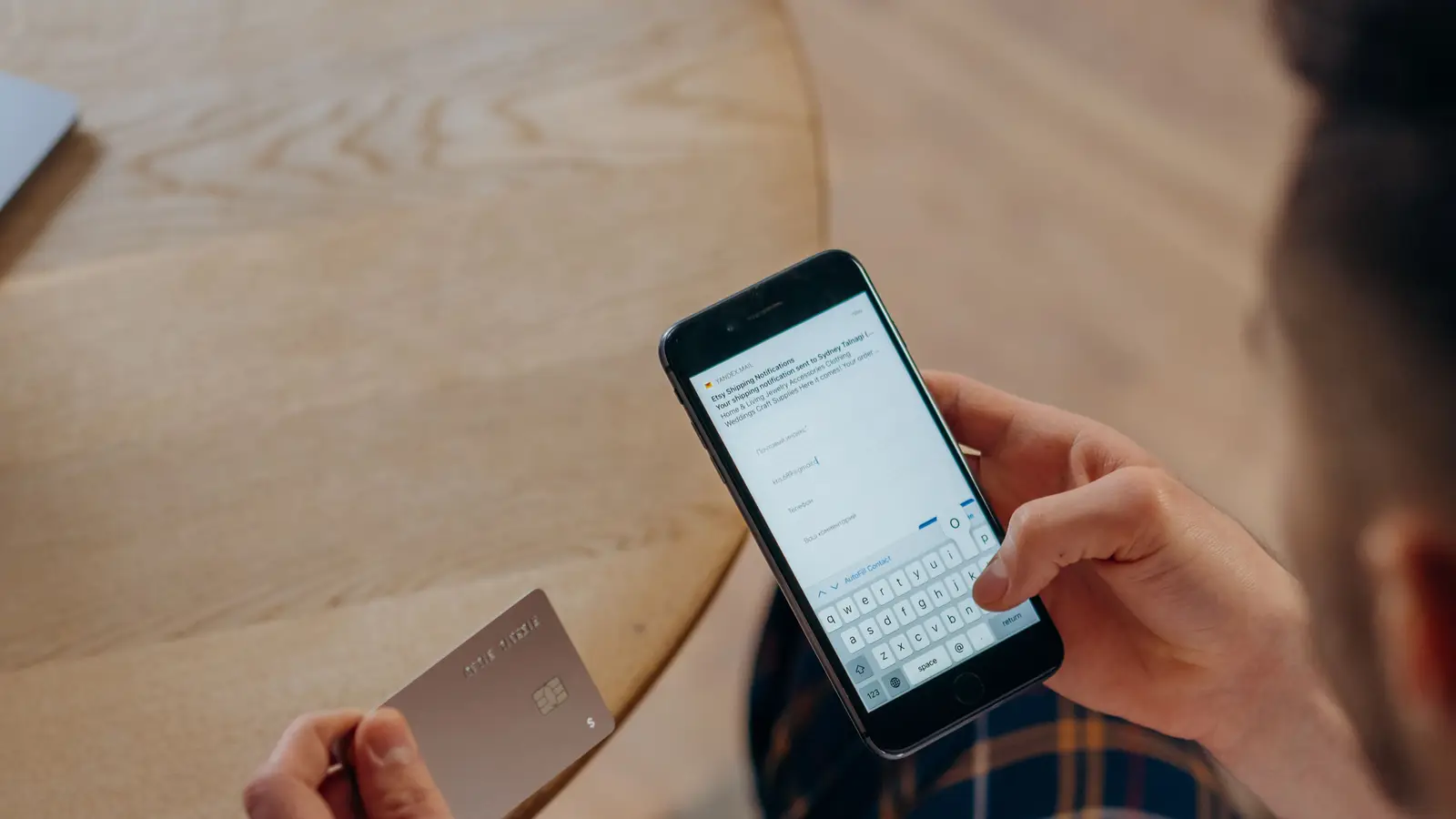
We use CEX.IO for the walkthrough because it is the exchange we have confirmed takes cards issued in Cape Verde: the country appears on none of the no-card lists on its limits and commissions page. It has operated since 2013, and residents of Cape Verde sign up with CEX OVRS LLC in St Kitts and Nevis. It is not registered with the Banco de Cabo Verde as far as we know. Other exchanges follow a similar flow.
Use a Visa or Mastercard with online payments
Check the card carries a Visa or Mastercard logo, not only Vinti4. Cape Verdean banks issue prepaid, Electron, Classic and Gold cards, and a card from your bank back home may also work. Online and foreign payments must be enabled. Our Vinti4 vs Visa guide explains what to ask at the branch.
Open and verify an account
Register with your own email and complete identity checks, or KYC“Know Your Customer”: the exchange asks for an ID, a selfie and sometimes proof of address before you can deposit. Glossary. The account name must match the cardholder’s name. Approval can take minutes or a few days.
Enable 2FA
Before the first deposit, switch on 2FAA second code, from an app such as Google Authenticator, on top of your password. Prefer an app to SMS. Glossary using an authenticator app. A stolen password alone is then not enough to withdraw your funds.
Deposit by card and approve 3-D Secure
Select a card deposit and read the fee before confirming: between 0.49% and 4.99% at CEX.IO, plus a service charge. Your bank then asks for 3-D SecureThe extra check your bank asks for in an online card payment (SMS or app code). Many exchanges refuse cards without it. Glossary approval by text or in its app. New accounts are capped at $1,000 a day and $3,000 a month for the first three months, with no more than three card deposits a day.
Buy USDT
Swap the balance into USDT on the spot market, where the fee is 0.25% at the entry tier. Check the amount against the converter at the top of the page.
Withdraw on the matching network
Slow down here. Open the receiving wallet, see which network it uses for USDT, pick exactly that one on the withdrawal screen and copy the memo if one is shown. Send 5 or 10 USDT as a test, wait for it to land, then send the rest.
Buy USDT with your card
Cape Verdean Visa and Mastercard cards accepted, 0.25% spot fee and withdrawals on the major networks.
Binance P2P with CVE: what the order book looks like
Binance added the Cape Verdean escudo to its P2P (peer-to-peer)Buying directly from another person: you pay them in escudos or euros and the platform releases the crypto it was holding. Glossary market in March 2023, alongside several other African currencies, and it is still the only major exchange where CVE appears. Bybit, OKX and Bitget do not support it, and KuCoin had no CVE ads at all. On paper, that makes Binance the obvious place to buy USDT with escudos. Here is what the order book actually held at 09:24 UTC on 16 Nov 2026.
On the buying side there were no ads at all. Nobody was selling USDT for escudos, and nobody was selling BTC, USDC, ETH or BNB either. On the other side sat three ads from people who want to buy USDT: one at 93 CVE (about −6.8% against a reference of 99.77 CVE per dollar), one at 85 CVE (−14.8%) and one at 80.04 CVE (−19.8%). The only payment methods Binance offers for escudos are “Western Union” and “Bank Transfer”; no Cape Verdean bank and no Vinti4 option appear by name.
So the escudo market is a place to sell, at a discount, not a place to buy. Selling 200 USDT to the best ad would have brought in 18,600 CVE, against roughly 19,954 CVE at the reference rate: about 1,354 escudos left on the table. Try other ad prices in the calculator.
If Binance has no sellers, a private seller on another site will do.
On LocalCoinSwap we found a CVE offer for USDT at 129.90 CVE, about 30% above the reference rate, under the headline “Fast Release Best Rates Trusted Seller”. With 10,000 CVE you would have received roughly 77 USDT instead of about 100. We could not verify the trader. A premium like that is a warning sign, not a bargain.
If you do trade P2P, stay inside the platform, keep the coins in escrow until the deal is done and never pay or release outside the order chat. Our P2P guide has the full checklist, and the Binance review covers the rest of the exchange.
Choosing the network: TRC20, ERC20, BEP20 or Solana
This is where real money disappears. USDT does not live on one blockchain; it is issued on several NetworkThe “road” crypto travels on: TRC20 (Tron), ERC20 (Ethereum), BEP20, Solana. Sender and receiver must use the same one. Glossary, each a separate system. A USDT on Tron (TRC20) and a USDT on Ethereum (ERC20) are worth the same, but they cannot see each other. When you withdraw, the exchange asks which network to use. It has to be exactly the network the receiving wallet or exchange uses to accept USDT.
| Network | Address starts with | Fee paid in | Worth knowing |
|---|---|---|---|
| TRC20 (Tron) | T | TRX | Usually low fees |
| ERC20 (Ethereum) | 0x | ETH | Usually the priciest |
| BEP20 (BNB Smart Chain) | 0x | BNB | Same format as ERC20 |
| Solana | letters and digits, no 0x | SOL | Needs a Solana-ready wallet |
Look at the two middle rows. ERC20 and BEP20 addresses share the same format; both start with 0x. The exchange accepts the address without complaint, the transaction goes through, and it arrives on a chain the recipient is not watching. If the destination is an exchange that does not support that network, the funds may be lost for good. A few exchanges will attempt recovery, which can take weeks and cost a fee; others simply will not.
The Memo / tagAn extra code some networks (XRP, for example) need on a deposit so the exchange knows whose money it is. Glossary is the second classic mistake. Some exchanges use one shared deposit address for many customers and tell them apart with an extra code, called a memo, tag or comment. It is uncommon on the four networks above, but the rule never changes: if the deposit screen shows a memo field, fill it in. Skip it and you are opening a support ticket and waiting.
The third catch hits people who already hold USDT in their own wallet. To send USDT on Tron you need some TRX in the same wallet; on Ethereum you need ETH, on BNB Smart Chain BNB and on Solana SOL. Without that coin to pay Gas / network feeWhat you pay the network to process a transaction. High on Ethereum at busy times, usually low on Tron or Solana. Glossary, your USDT is stuck. ERC20 is generally the most expensive to use; TRC20, BEP20 and Solana are usually much cheaper. The exact fee always shows on screen before you confirm.
Fees example
Let’s put numbers on it. At the reference of 99.77 CVE per dollar (ECB rate of 13 Nov 2026, via the euro peg), 10,000 escudos is about $100. What arrives as USDT depends on the exchange’s card fee, on what your bank charges for a foreign-currency payment (not published anywhere we could find, so we use 2% as a placeholder) and on the 0.25% spot fee.
| Route and scenario | You pay | You get (approx.) | Cost |
|---|---|---|---|
| Card 0.49%, bank 0% | 10,000 CVE | 99.5 USDT | 0.74% |
| Card 4.99%, bank 2% | 10,000 CVE | 93.1 USDT | 7.12% |
| Card 0.49%, bank 0% | 50,000 CVE | 497.4 USDT | 0.74% |
| Card 4.99%, bank 2% | 50,000 CVE | 465.5 USDT | 7.12% |
On top of that come the card service charge, which CEX.IO does not quantify, and the network fee on withdrawal. Even the worst card scenario beats the P2P alternative we found: the same 10,000 escudos at 129.90 CVE per USDT would have bought about 77 USDT. A visitor using a UK or EU card skips the escudo step, though their own bank’s foreign-transaction fee works like our 2%. For platform-by-platform fees, see our exchange fee comparison or our pick of the best crypto exchanges in Cape Verde.
Remember the return leg too. USDT bought today at about 100 escudos per dollar goes back to escudos at whatever the rate and fees are on the day you sell. Our selling guide covers the realistic exits.
Storing USDT
Leaving USDT on an exchange is convenient if you trade often, but it means trusting the company with it, a CustodialThe exchange holds the keys for you, like a bank holds your balance. Convenient, but you rely on the company. Glossary arrangement. For larger or longer-term holdings, a wallet where only you hold the seed phrase removes the risk of the platform failing or freezing your account.
When you choose a wallet, make sure it supports the network your USDT is on, and write that network down next to your seed phrase. Many wallets show USDT on different networks as separate balances, which confuses newcomers. Keep a little of the network’s native coin for fees as well. Our wallet guide compares the options.
To buy USDT in Cape Verde without nasty surprises: a Visa card, an exchange that accepts the country, a network checked twice and a wallet of your own for anything you are not using straight away. Escudo P2P is for selling, not buying, until sellers return.
Start with a small first purchase
Test your card with a low amount, confirm the network, then scale up.
Frequently asked questions
How do I buy USDT with escudos?
Indirectly. Your Visa or Mastercard pays the exchange in dollars or euros and your bank converts the escudos, at a predictable rate thanks to the 110.265 euro peg. The only market quoting USDT directly in CVE is Binance P2P, and on 16 Nov 2026 it had no one selling. The card route is the one that works.
What is the cheapest network to send USDT?
As a rule, TRC20 (Tron), BEP20 (BNB Smart Chain) and Solana cost far less to send on than ERC20, which runs on Ethereum. But the cheapest network is useless if the receiving wallet or exchange does not support it. Check what the recipient accepts first, then read the withdrawal fee on screen before you confirm.
What happens if I send USDT on the wrong network?
Usually the money is lost. Send USDT over BEP20 to an address that only receives ERC20 and the transaction lands on a chain the recipient is not watching. Some exchanges will try to recover a wrong-network deposit, slowly and for a fee; many will not. Always send a small test first.
Do I need a memo or tag to deposit USDT?
On TRC20, ERC20, BEP20 and Solana you usually do not. Some networks and some exchange deposit addresses do require a memo, also called a tag or comment, to identify your account. The rule is simple: if the deposit screen shows a memo field, it is mandatory.
Is Tether a good way to hold money in Cape Verde?
It depends on which currency you think in. The escudo is pegged to the euro; USDT tracks the US dollar. Swapping escudos for USDT adds euro-dollar exchange risk in both directions. If your costs are in escudos or euros, a euro stablecoin such as EURC may fit better. USDT also depends on its issuer, Tether; see our USDT page.
Can I buy USDT on Binance from Cape Verde?
Binance lists Cabo Verde as available and is the only major exchange with escudos on P2P, but on 16 Nov 2026 the CVE market had only three buy ads at 93, 85 and 80.04 CVE and no sellers. Binance card purchases run through partners and we could not confirm they accept Cape Verdean cards. See our Binance review.